NetScaler AI Gateway: what it is, what it does and how much it costs
NetScaler AI Gateway is not interesting because it gives Citrix another AI-labelled feature. It is interesting because it points to where enterprise AI is heading: away from scattered app-by-app experiments and towards governed traffic flows that infrastructure teams can actually observe, route and control.
Most organisations are discovering that AI adoption creates a new kind of application delivery problem. The traffic is no longer just web sessions, APIs and virtual apps. It is prompts, responses, model calls, token consumption, sensitive business context and a growing number of teams trying to connect internal workflows to external or internal AI services. If every application team solves that alone, cost control and data governance become fragmented very quickly.
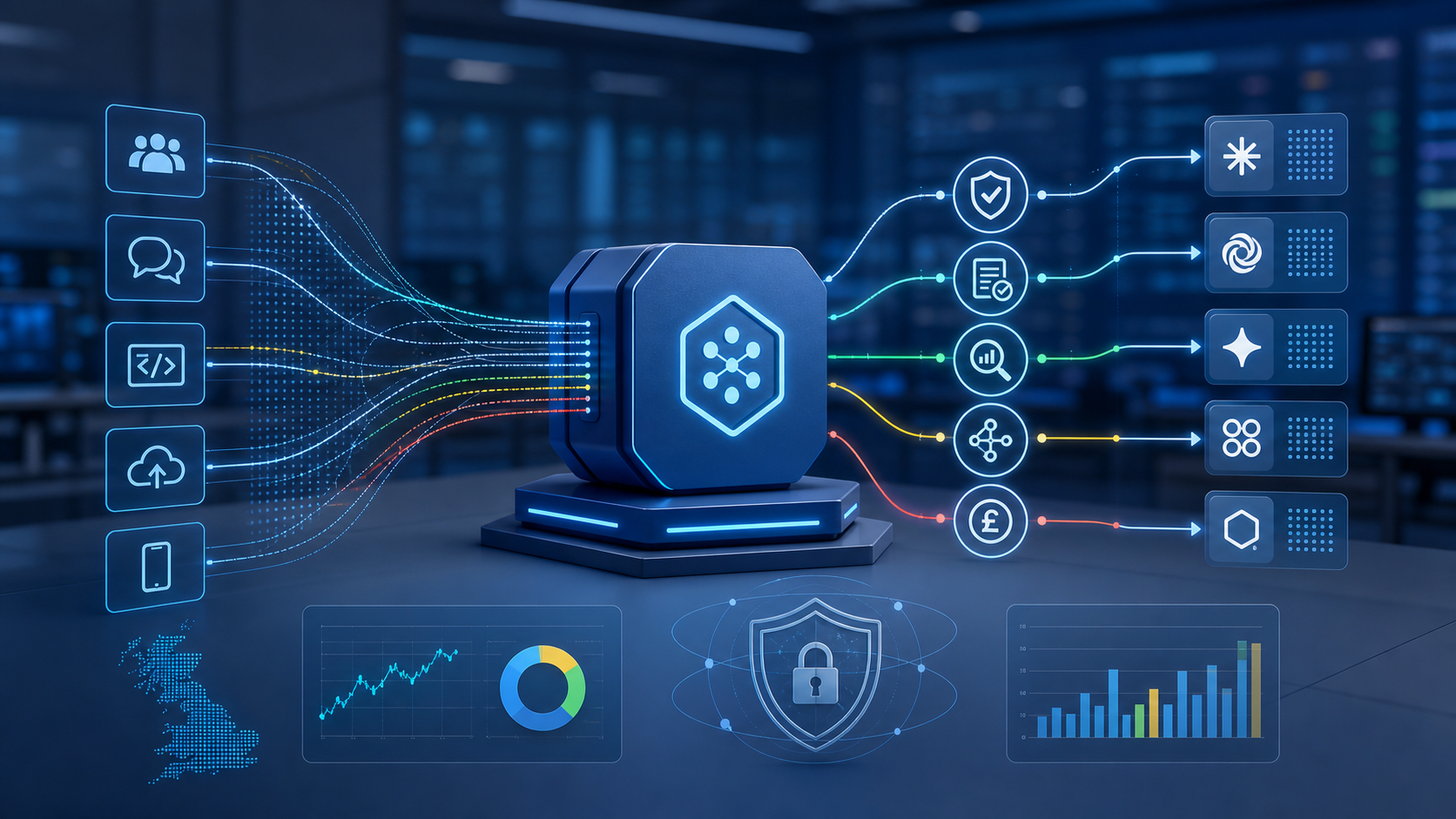
This is where NetScaler AI Gateway becomes a useful product story. It sits in the path of AI traffic and gives the organisation a control point for requests moving between applications and large language model services. In practical terms, that means routing AI requests to the right backend model, applying prompt-management rules, enforcing policy, observing usage and giving infrastructure teams a familiar place to manage a new class of application traffic.
The cost angle matters because token usage is operational spend, not an abstract technical metric. Once AI features move into production, uncontrolled prompts, inefficient routing and poorly governed model selection can turn into unpredictable monthly bills. A gateway approach gives teams a way to shape traffic before it hits the model: route cheaper workloads to suitable models, reserve more expensive models for higher-value tasks, apply rate and policy controls, and make usage visible enough to challenge waste.
So how much does NetScaler AI Gateway cost? The public answer is not a neat per-user or per-token figure. NetScaler's published pricing is built around software subscriptions, Citrix subscription entitlements, throughput capacity, edition choice, instance type, hardware or cloud deployment model, and sales or service-provider quoting. For some Citrix estates, the first question is whether the required NetScaler entitlement already exists. For broader application delivery or new AI gateway use, the cost model needs to include subscription capacity, implementation effort, observability/reporting work and the downstream LLM token spend that gateway controls are supposed to reduce.
The governance angle is just as important. AI prompts often contain the working detail of a business process: customer information, support notes, internal documents, incident detail or commercially sensitive context. NetScaler AI Gateway's prompt-management and policy features matter because they let organisations treat AI traffic as something that needs inspection and control, not just connectivity. That is a much more mature posture than letting each application quietly decide what can be sent to which model.
For existing NetScaler customers, the strategic point is familiarity. Many enterprises already use NetScaler as a trusted application delivery and security layer. Extending that operational model to AI traffic may be more realistic than asking every team to adopt a separate governance tool, a separate observability stack and a separate cost-control process. It turns AI governance into an extension of application delivery rather than another disconnected platform decision.
That does not mean AI Gateway is a magic answer. The serious work is still in the design: deciding which AI workloads need gateway control, which models should be available, how prompts should be handled, what data must never leave the organisation, and how usage should be measured in pounds rather than vague consumption charts. The value comes when the product is connected to real policies, real workflows and real cost reporting.
Thintech's view is that this is the right kind of AI infrastructure conversation. Not hype, not fear, and not another generic AI strategy deck. The useful question is simple: if your teams are starting to build with AI, where will you control the traffic, measure the spend and protect sensitive workflows when those experiments become production systems?