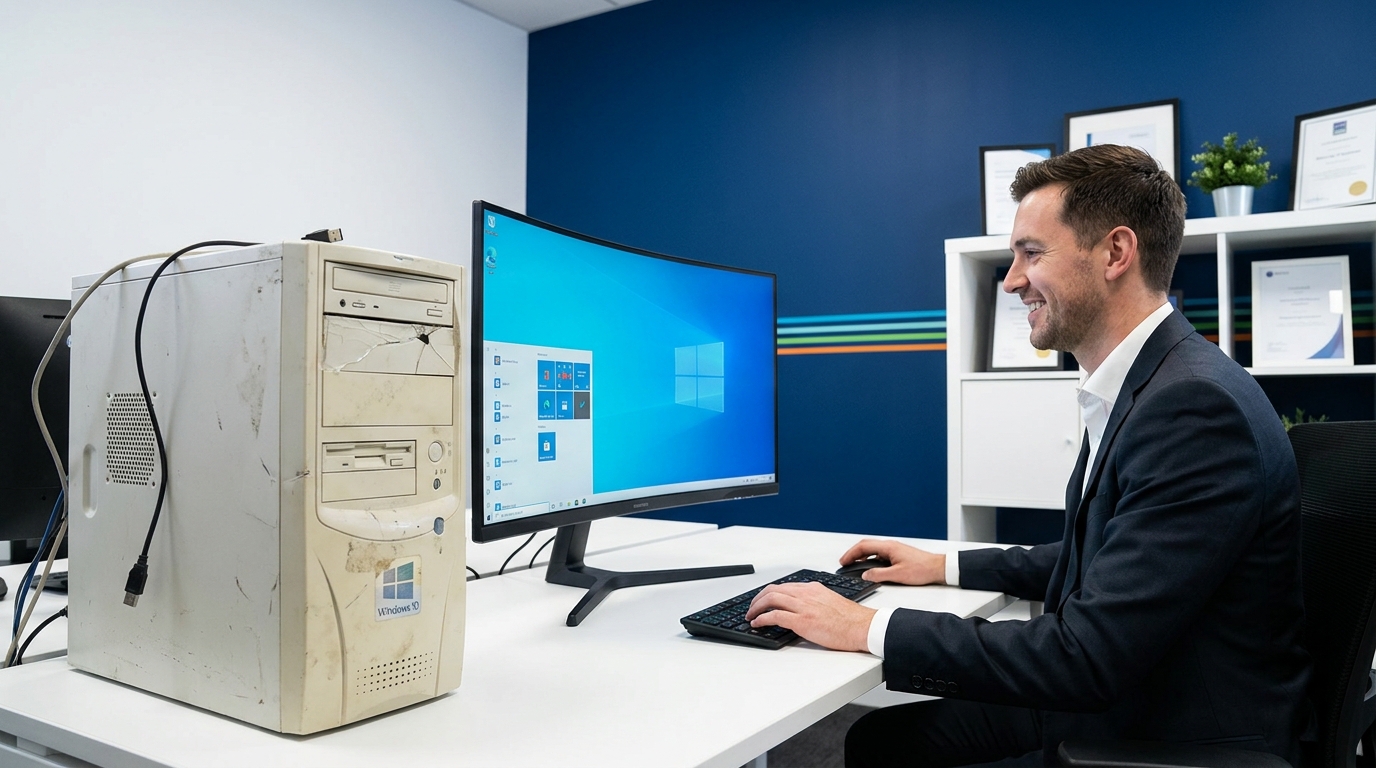
Commercial case for repurposing Windows 10 PCs as Citrix thin clients
Repurposing Windows 10-era hardware as Citrix thin-client endpoints can be commercially valid, but only when the estate is locked down, supportable and cheaper than buying new endpoints.
For IT leaders, infrastructure owners, EUC/Citrix teams, the decision is not whether an old device can launch Citrix Workspace. It is whether lifecycle risk, Windows 10 support exposure, RAM/storage limits, management overhead and user experience still make the reuse case cheaper and safer.
The practical test for Commercial case for repurposing Windows 10 PCs as Citrix thin clients is whether the rollout changes a real workflow, reduces measurable exposure, or removes enough support and governance effort to justify the disruption.
The sensible starting point is to map where Commercial case for repurposing Windows 10 PCs as Citrix thin clients touches live workflows, user data, support ownership and audit evidence.
For endpoint and security teams, the control question should be concrete: which data can be captured, where it is stored, how long it lives, who can retrieve it, and what happens when a device is lost, shared, rebuilt or investigated.
For service owners, the readiness question is just as practical. Users need clear policy, support teams need a repeatable disablement and troubleshooting path, and compliance teams need evidence that settings are deployed consistently rather than assumed from a launch deck.
A controlled pilot should separate standard users, privileged users, regulated teams and shared-device scenarios. Each group needs a different risk decision because the value of local AI features is not the same as the exposure created by captured screens, cached context or unclear retention behaviour.
Monitoring also matters after launch. The organisation should know which devices have the feature enabled, which exceptions were approved, which incidents mention the feature, and whether helpdesk demand rises because users do not understand what is being recorded or indexed.
The practical deliverable is a small control matrix: user group, device type, data sensitivity, default setting, exception owner, support route and quarterly review date. That gives leaders a way to approve progress without turning every AI PC feature into an uncontrolled estate-wide experiment.
That means separating rollout ambition from operational proof: who owns the control, which user groups are affected, what support burden changes, and what evidence would show the risk is being managed.
One useful signal is this: 8 Best Thin Clients for Virtual Desktops (June 2026) Buying Guide
One useful signal is this: Citrix Workspace™ app for Windows
One useful signal is this: Known issues | Citrix Virtual Apps and Desktops™ 7 2402 LTSR
Thintech's view: Treat the idea as a controlled endpoint-reuse business case: compare RAM/storage upgrade cost, thin-client OS options, Citrix Workspace supportability, security lockdown, power/support overhead and replacement-device pricing before rolling it out.
Before treating this as ready for broad rollout, validate the user groups, current controls, security obligations, operational owner and expected risk reduction. That turns the conversation from product hype into a controlled assessment.